
|
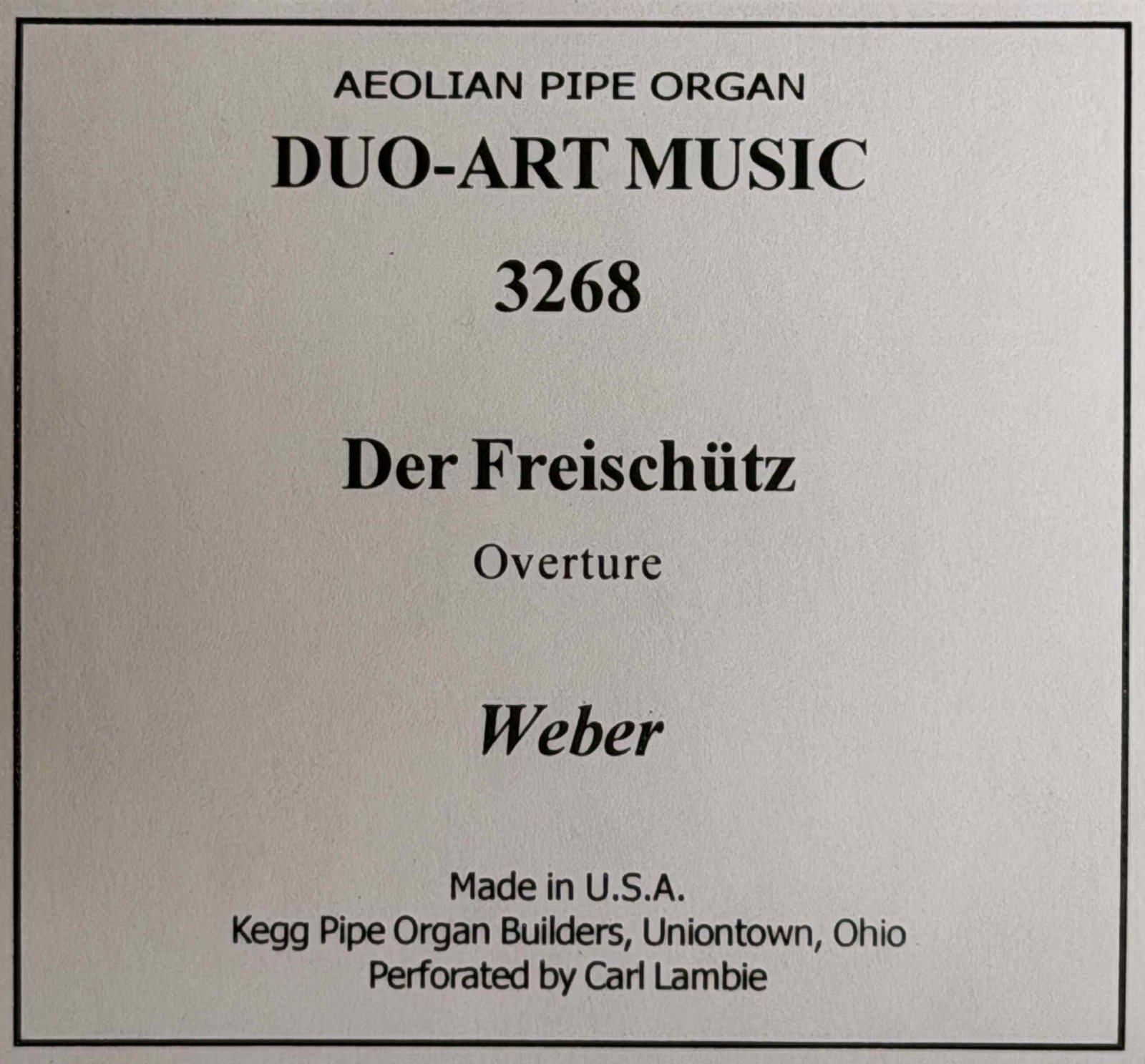
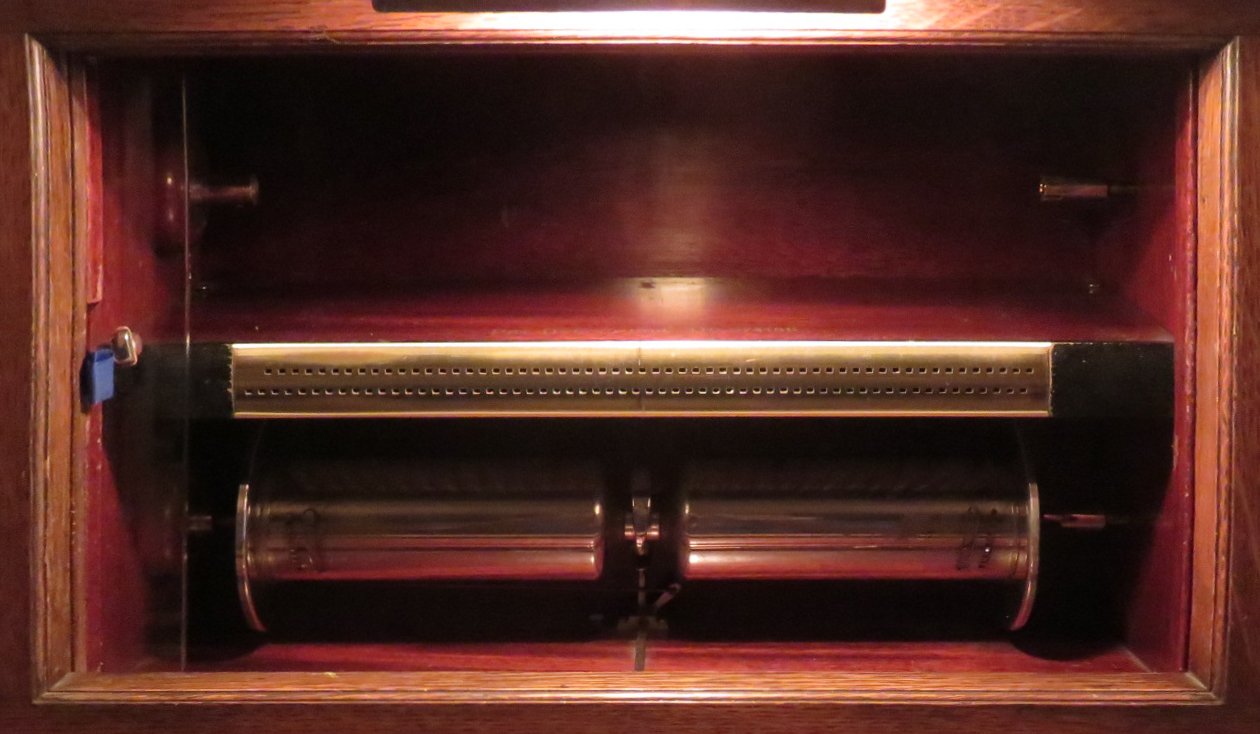
Aeolian began building pipe organs in the very early 1900s. These first examples were built by the Votey company as at the time, Aeolian built only player reed organs in-house. Until about 1916, Aeolian provided their pipe organs with semi-automatic players that used the same rolls as the Solo Orchestrelle, which was their largest player reed organ. These players became commonly known as the 116 note player because it played two manuals of 58 notes each. Stop and expression control was done manually by the operator. Printed instructions were provided on the roll. The operation of this player is simple. Each port connects to a manual key, 1-58. The lower tracker ports 1-12 also play the Pedal notes 1-12. Most players have a control that can swap the manuals between rows. This control is labeled, Unison-Normal-Reverse. Regardless of the position of this switch, the Pedal always plays from the lower ports 1-12.
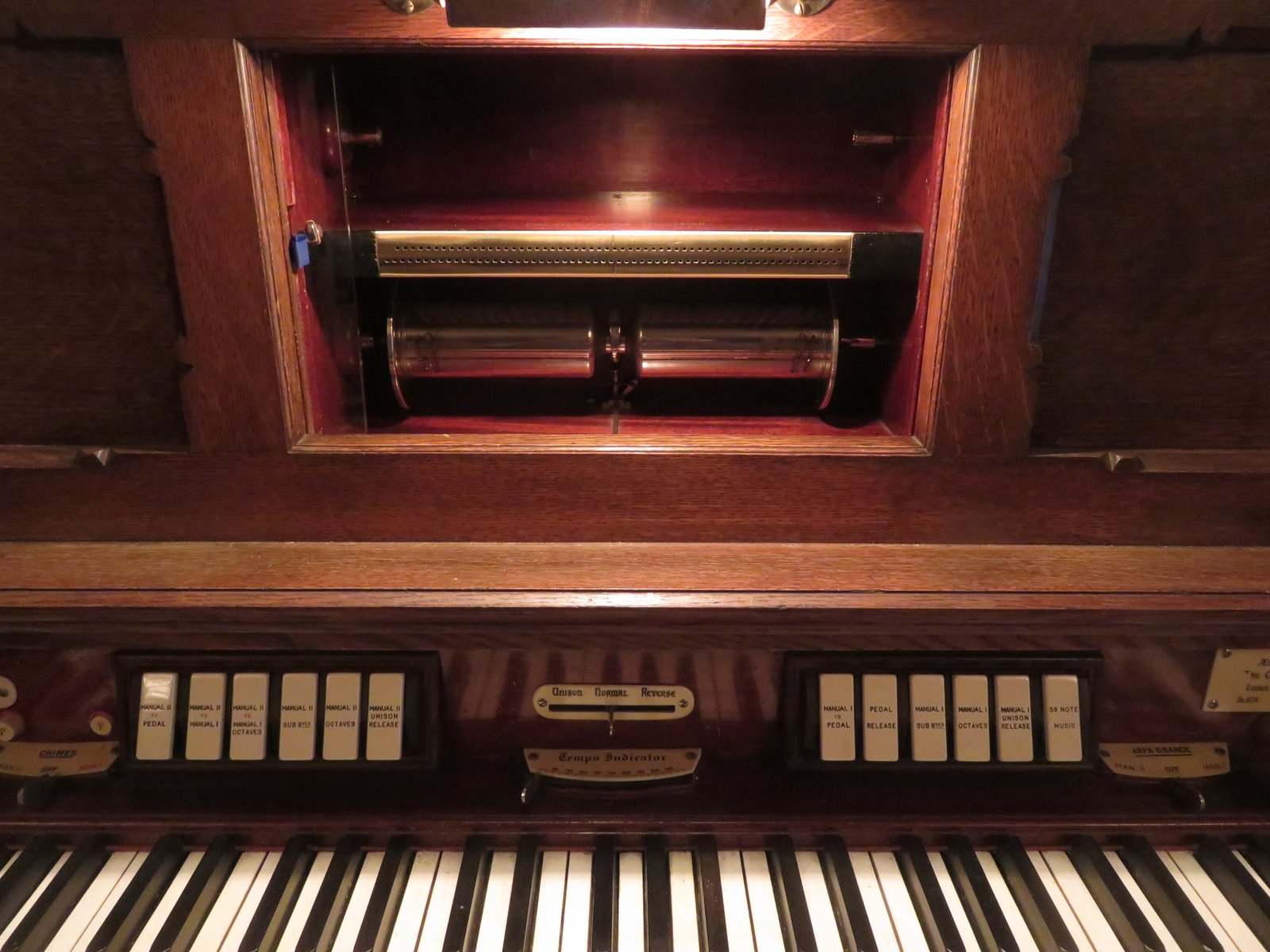
This player is operated by pressure. The spool box has a glass cover that is closed and during play, the spool box is pressurized. During play, a marker is raised to the center of the tracker bar showing the position of the paper over the bar. There is a center line printed on the roll that must be centered on the marker shown here:
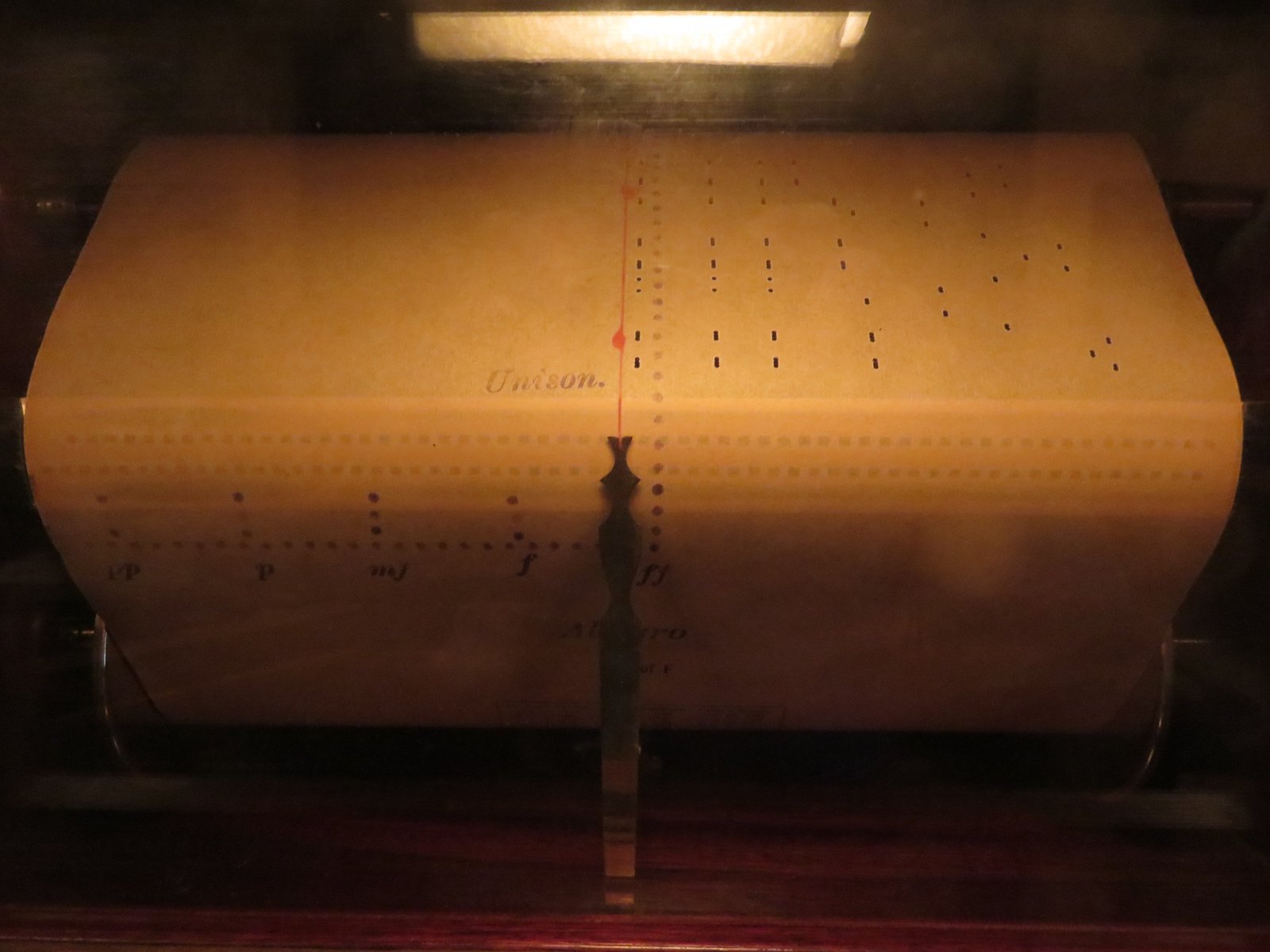
There is a tracking knob below the treble of the lowest manual that moves the spools. The operator watches the roll and uses the tracking knob to keep the printed line centered on the marker.
|