
|
The RJ player was developed to address a market need for a 2 manual residence organ player. It is a smaller, simpler and less expensive version of the earlier R player, which was a 3 manual system that was made available by Wurlitzer at least by the early 1920s, and also designed for the residence player organ market. The R player required a 3 manual organ to play properly, so when it was used for 2 manual organs, a third 37 note Solo division was provided in the relay that could only be addressed by the player. Many 2 manual player organs were built this way. In the late 1920s, Wurlitzer decided to offer a smaller 2 manual player for these smaller organs, with rolls specially played for them. It was introduced about 1927. This player was designated the RJ player (R junior?) and the organs it was intended for were the RJ model series. The player could be installed in the console above the keyboards, or it could be provided in a separate cabinet. The RJ organs ranged in standard sizes from 3-7 ranks, and could include up to 4 tuned percussions and a modest toy counter. In addition to the RJ organs, the RJ player was often placed on non-RJ organs when deemed appropriate, including custom 3 manual organs where the third manual of the organ was not played from the player. According to Wurlitzer shipping records, there were 29 RJ organs built and an unknown number of additional players for non-RJ organs. Not all RJ organs went to homes. The author's RJ-11 organ was originally installed in a cemetery chapel, and there are two custom 3 manual cemetery chapel organs known to the author that were fitted with this model player. It appears that all rolls for this machine were hand-played. The performer is credited on each roll. The recording console still exists and the author has been told that there are markings on this console that indicated which stops and note ranges were available to the performer, depending on which system the rolls were being recorded for. The music is elegant and well-played. It leans more toward the theater than the concert hall. Given the reputation of the company, this seems reasonable to expect. Many famous organists of the day recorded for Wurlitzer. The author has not located a copy of the RJ roll catalog. Provided here is the catalog he has assembled from known rolls, both in his library and others he has documented. New information regarding titles not on this list will be gratefully received. You can see the known catalog here:
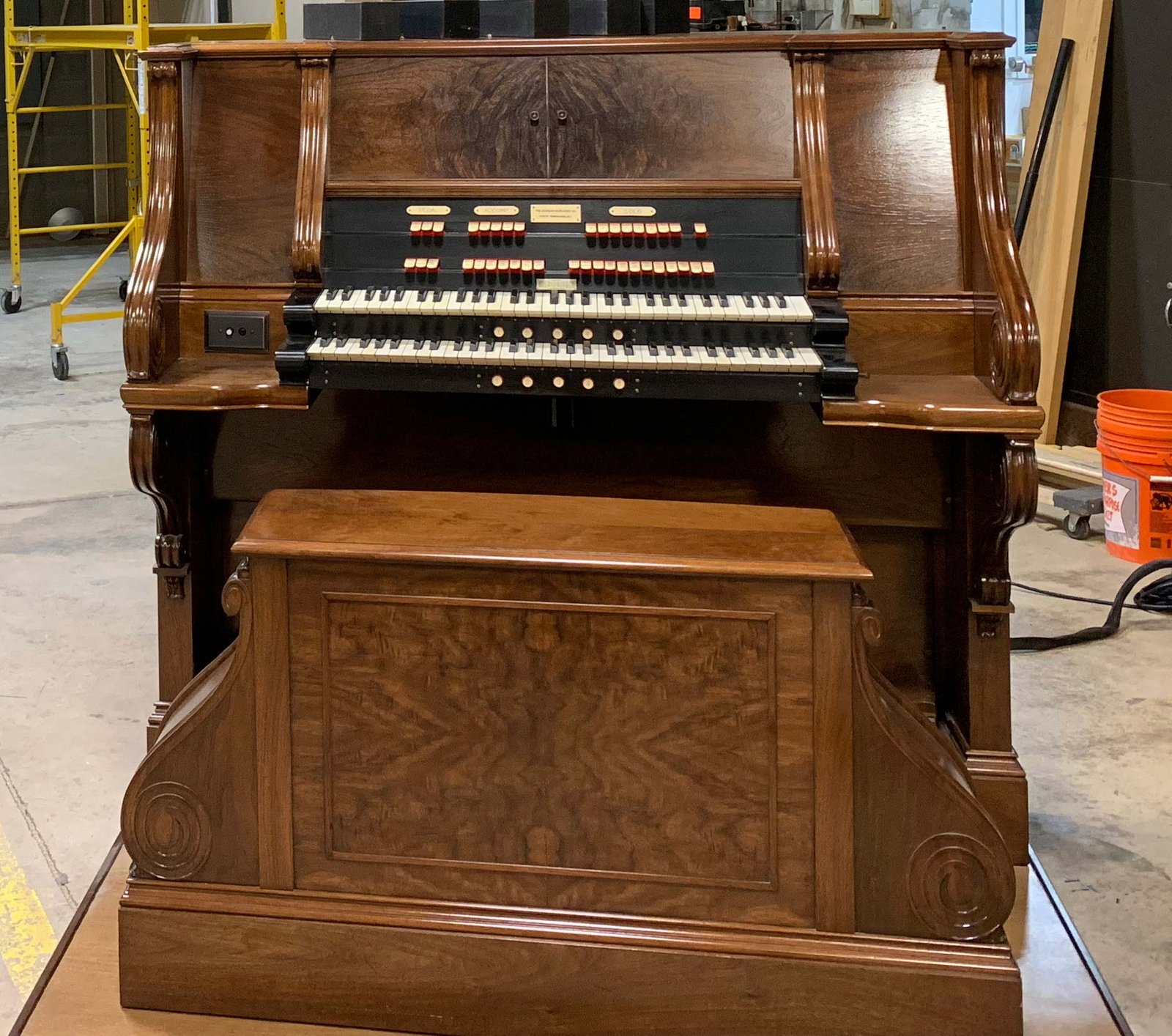
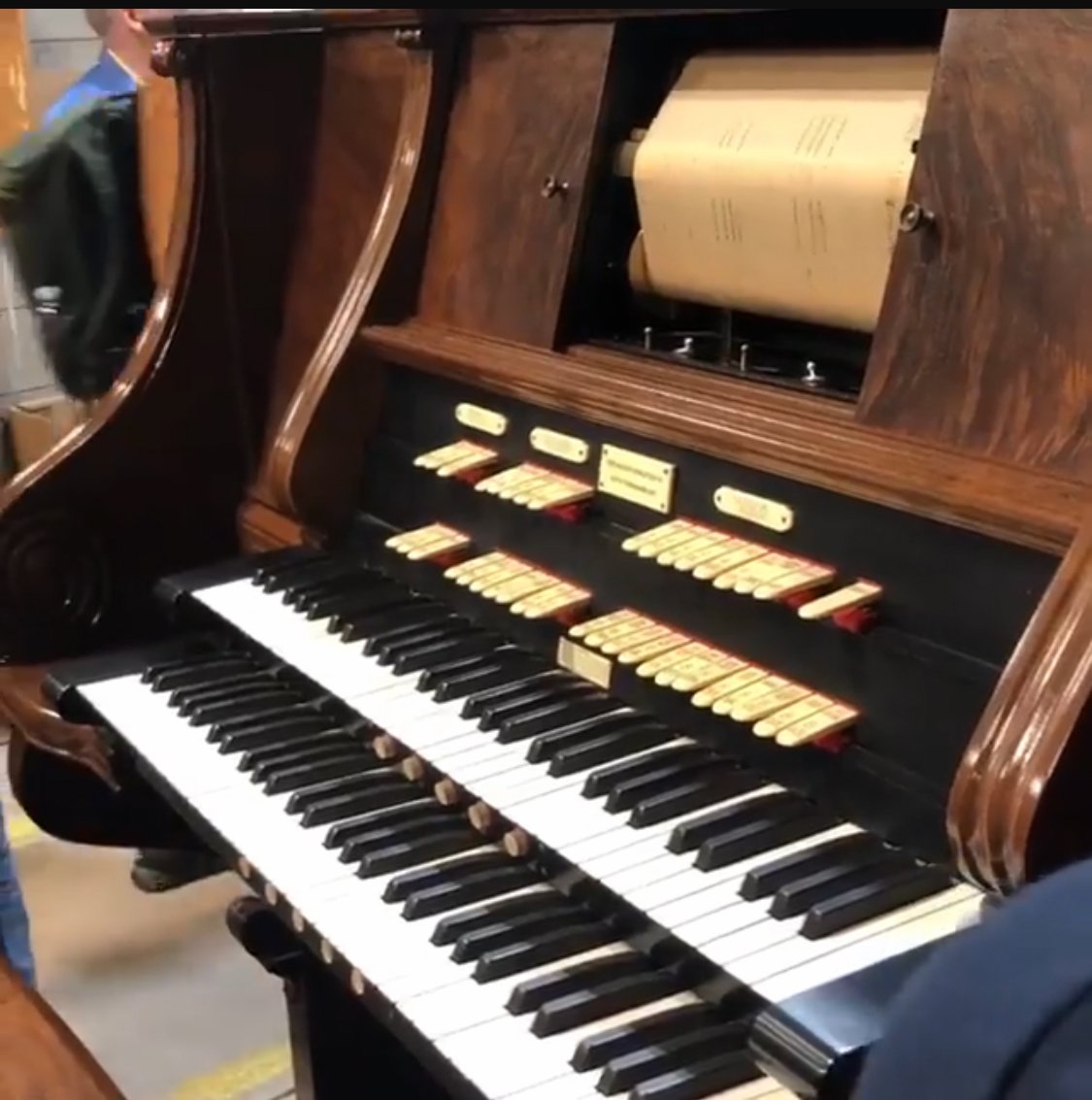
Here are photos of the standard RJ player cabinet, used when this player was not installed into a console. The larger R player also usually had a cabinet of this style and slightly larger. 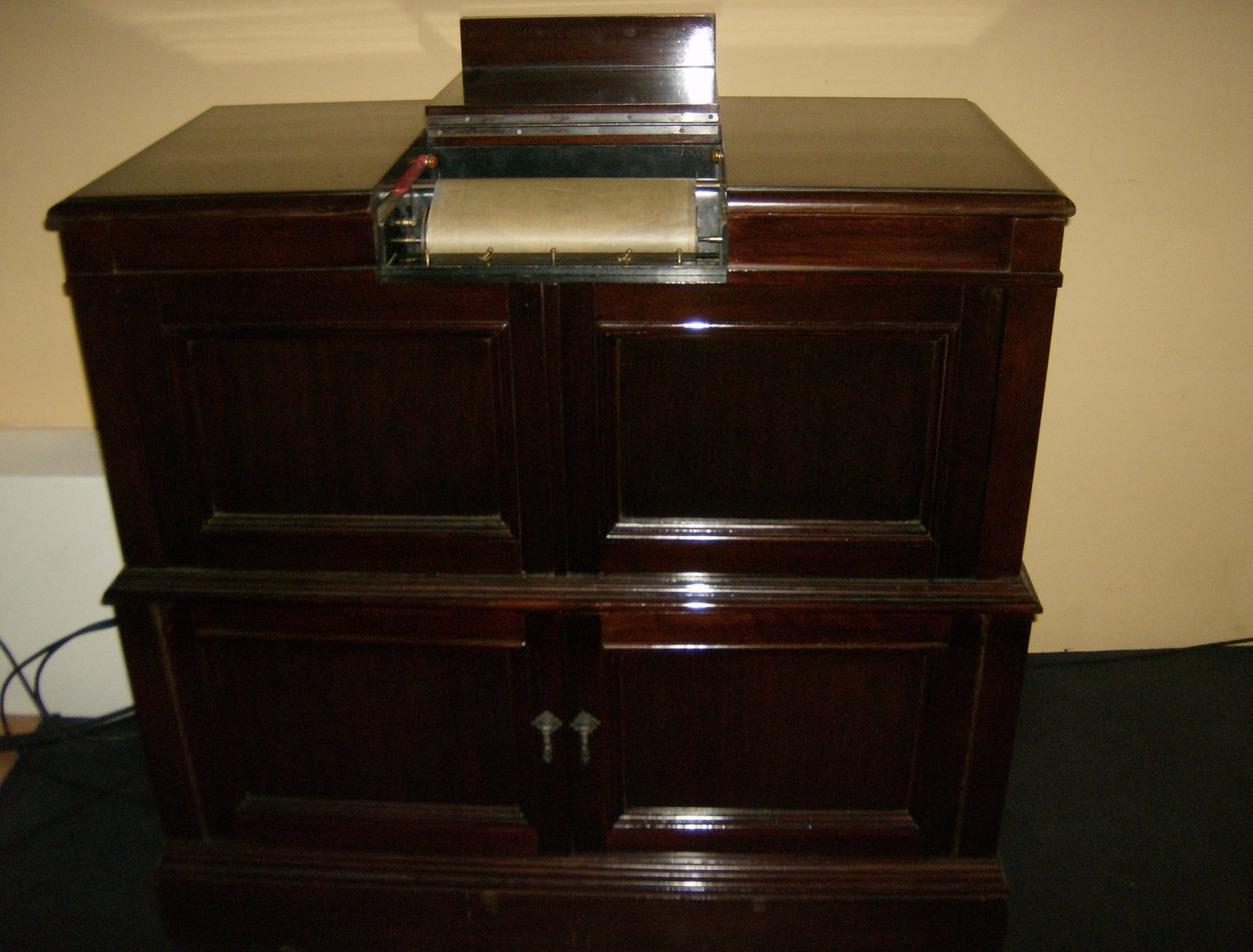
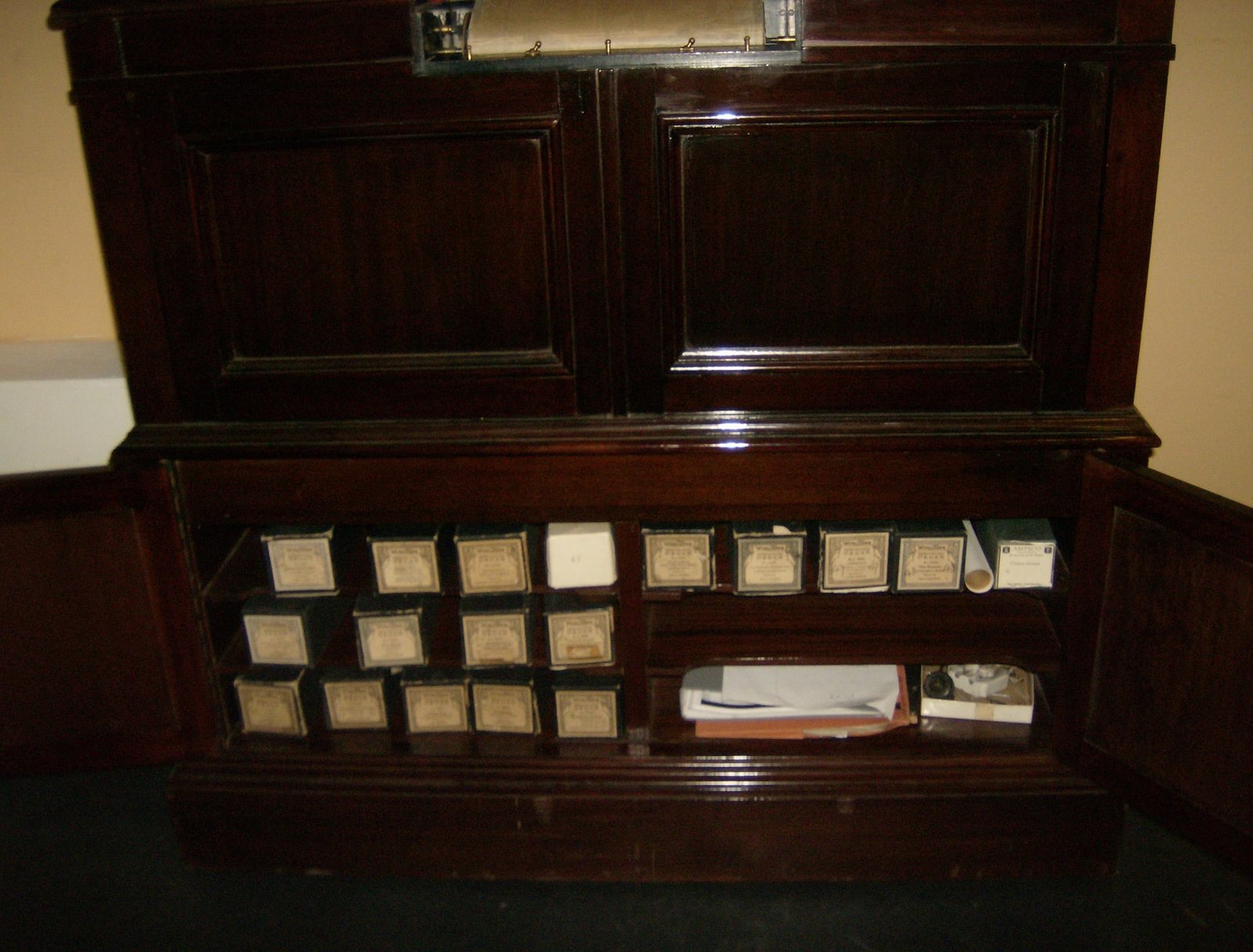
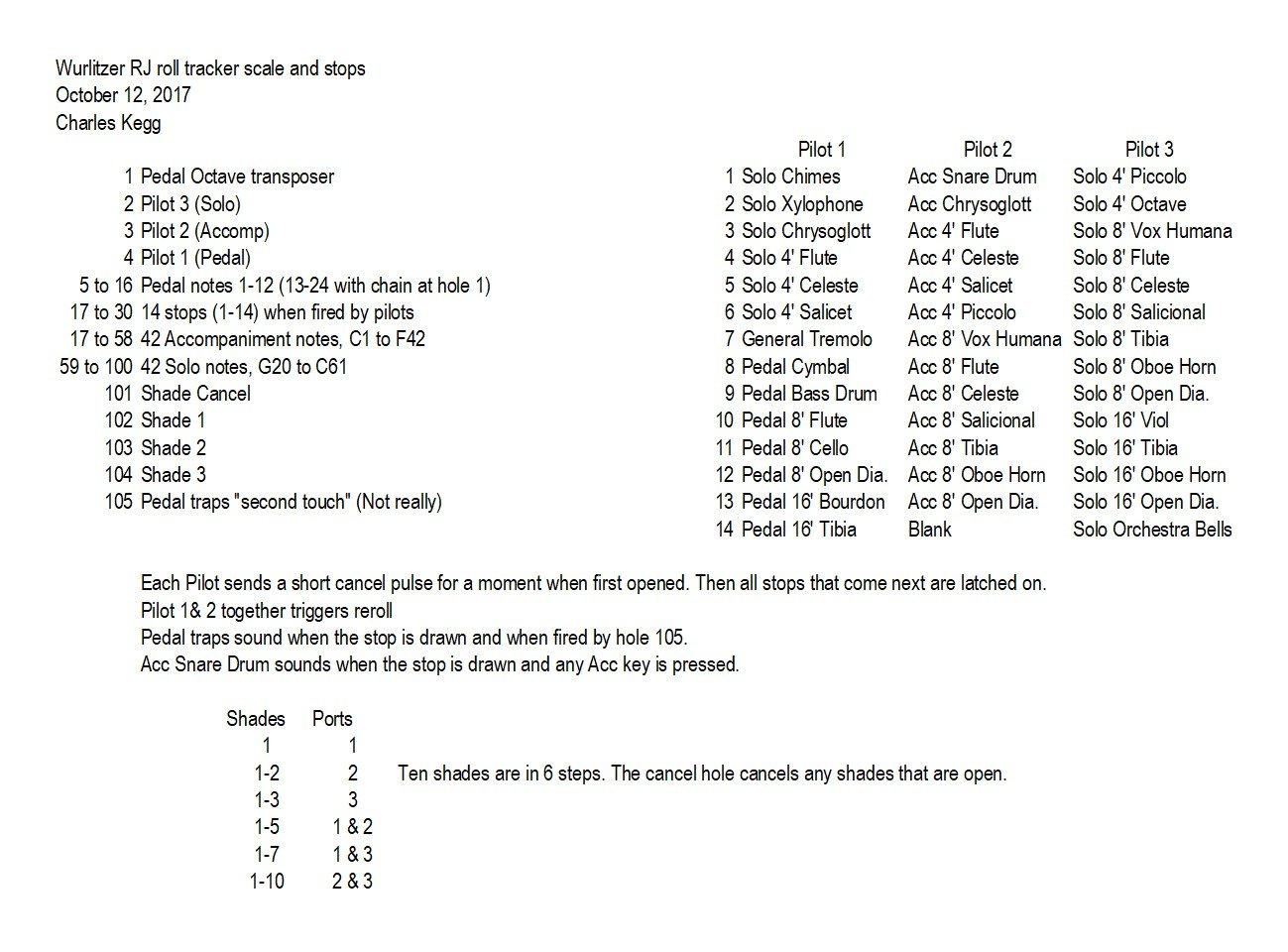
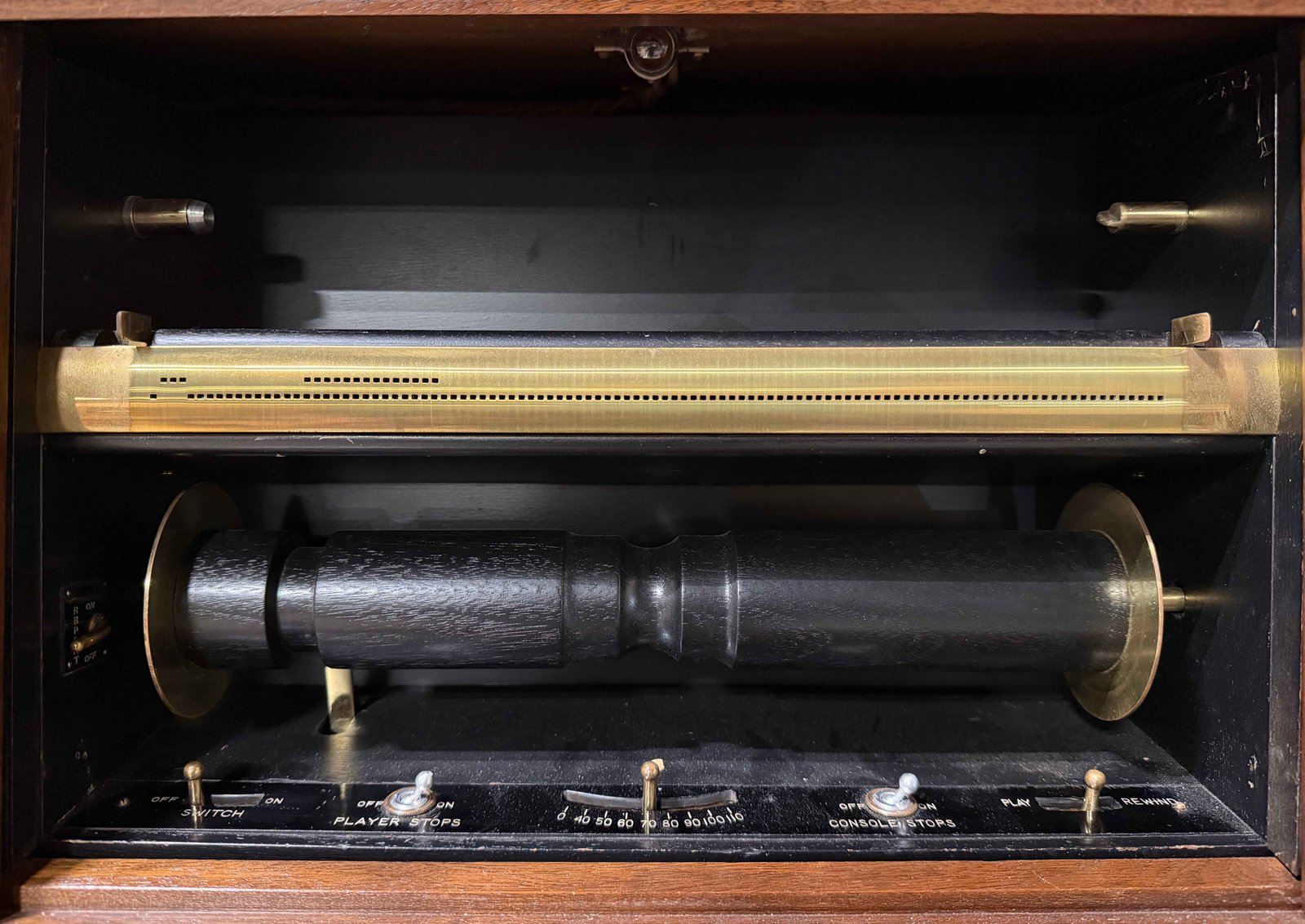
The tracker bar layout can be seen above. Ports are in-line except for the Pilot ports and the Stop ports, which are higher than the others, and the Stop ports are in addition to the Accompaniment note holes below. Playing notes are as indicated, 42 notes for each manual. The manual ports are always connected to their organ notes, except for Accompaniment ports 1-14, which are disconnected during a stop change. There are 3 Pilot ports that control stops. During a stop change, a Pilot hole is opened. At that moment, Accompaniment notes 1-14 are muted, stops previously set for that Pilot are canceled and the Stop ports are connected to the 14 Stop circuits of that Pilot. Then the new stops ports are opened, locking in the new stop selection. The Pilot hole then closes, disconnecting the Stop ports and reconnecting the Accompaniment note holes. Expression is controlled by 4 ports as shown in the chart above. The Cancel port cancels the shade position in use, which closes the shades. The 3 shade ports can be opened in combination according to the chart that will open the shades to that position. That position is then locked in until the Cancel port is opened. While this only saves 2 ports that would be required for direct control of the available 6 expression stages, its eliminates expression chains, which will weaken the paper. Trap control is according to the chart.
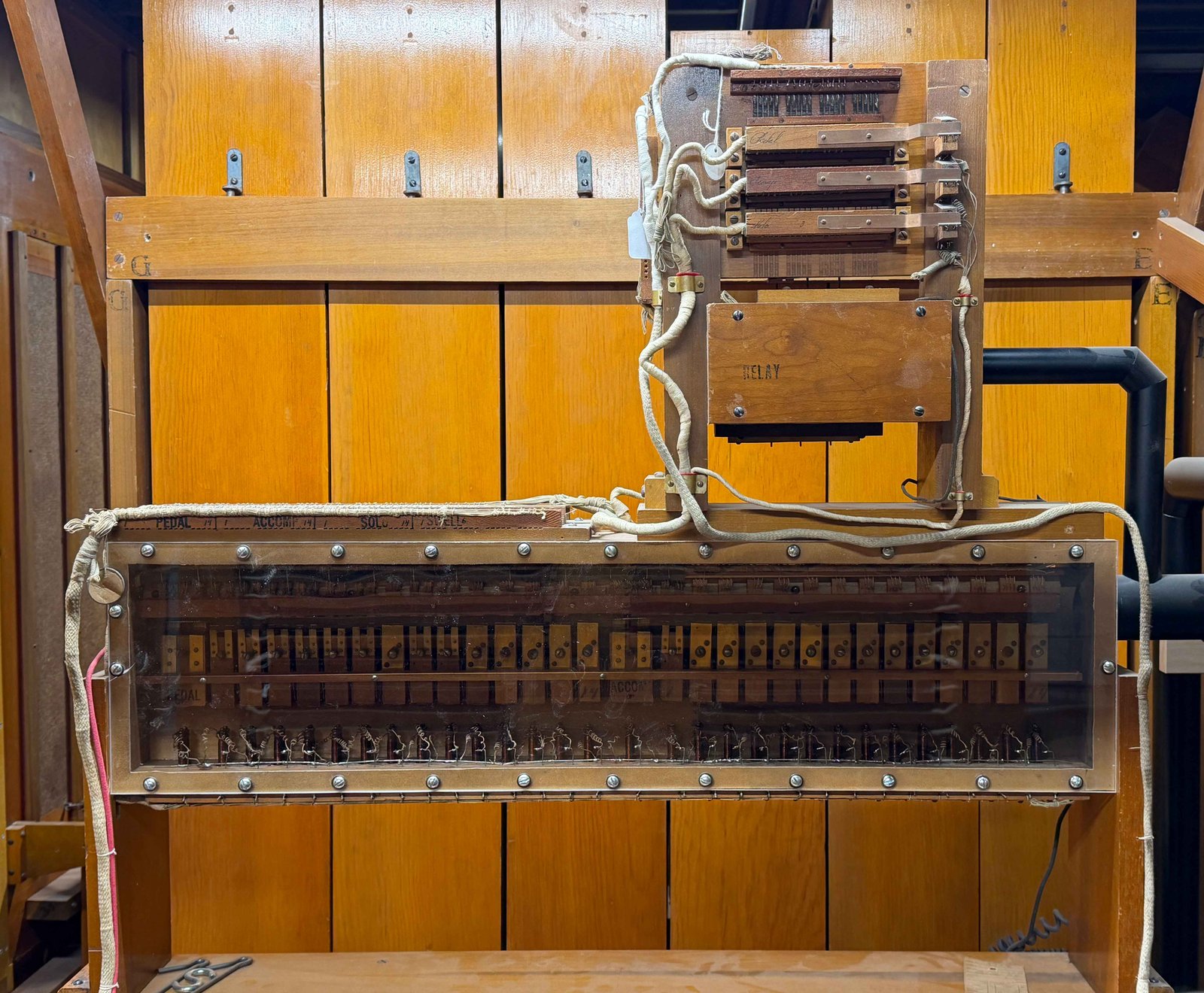
This player uses a remote machine that controls stops and shades, which is usually located with the relay. An example of this machine is shown above. This particular example has had the wood chest cover replaced with a clear cover so that the interior mechanism can be observed. The three switches at the top are the Pilot switches. The busses are connected to the 14 stop ports on the tracker bar. The switch outputs go to each section in the chest. In the photo you can see half the mechanism. The other half is on the other side. There are 14 pneumatics for each Pilot section, plus a Cancel pneumatic. When it is at rest, the Cancel pneumatic provides voltage to the stop contacts that are mounted on the stop pneumatics. When the Cancel pneumatic is triggered, it removes the voltage to all the stop maker bars on the stop pneumatics. It is triggered by an extra contact on its Pilot switch, shown here:
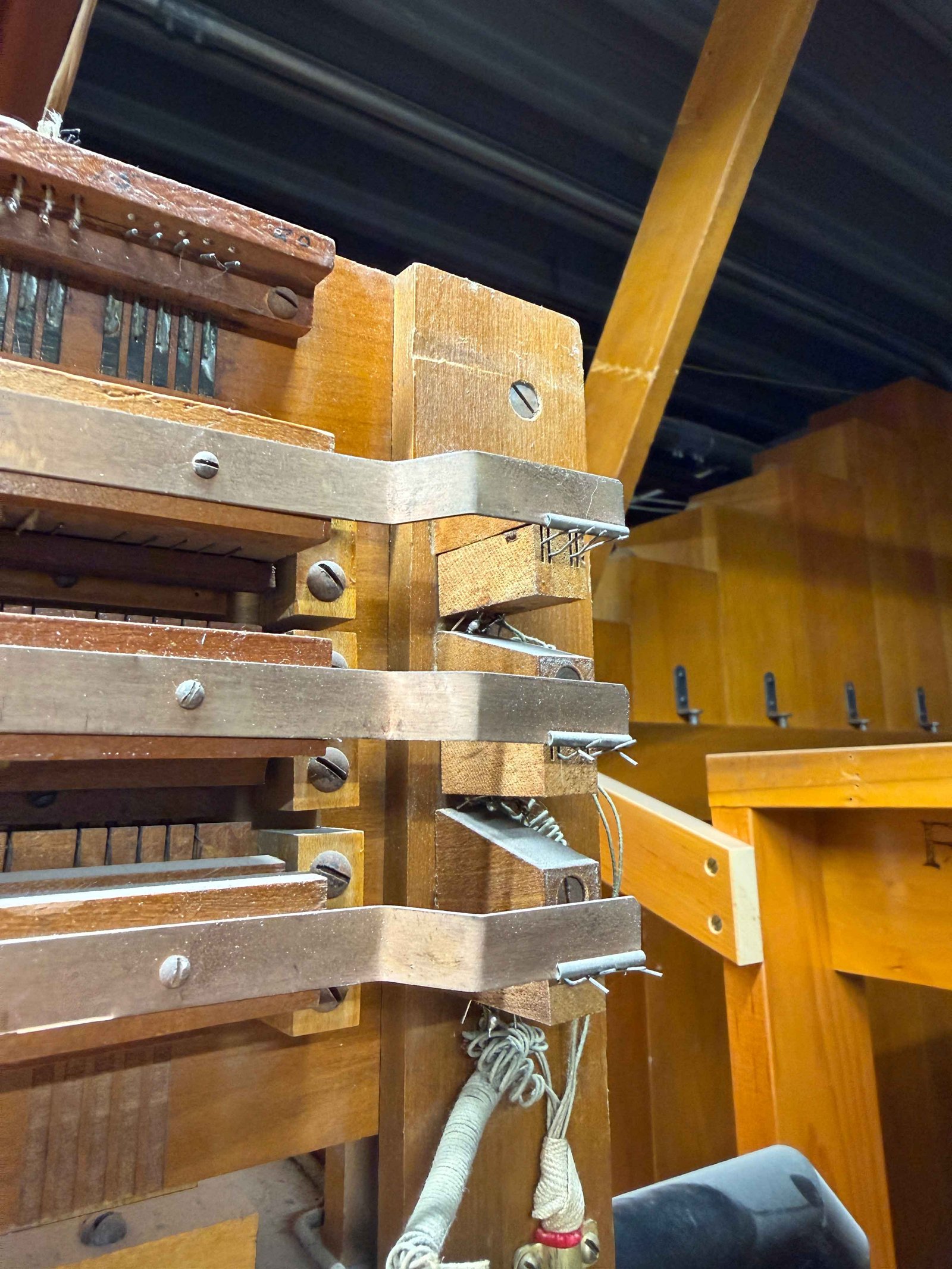
There is a contact on each stop pneumatic that feeds back to the magnet that controls it, thus locking it on. When a Pilot port is opened, a signal is sent both to the extra contact on the Pilot switch as well as the magnet to move the Pilot switch, which is designed to be slightly slow in operation. When energized, but before the Pilot switch moves, the extra contact sends a brief signal to the Cancel pneumatic of that section, canceling any stops that may be on in that section. The Pilot switch then connects the stop ports to its section of stop pneumatics and the desired stops are set and locked.
|