|
The Clark Orchestra Roll Company was located in Milwaukee and made music rolls for many instruments. During the heyday of the residential pipe organ period, they devised a plan whereby they would provide music rolls for a player system of their own design and offer it to pipe organ companies that may need it. The original idea was that they would provide the mechanical specifications to the organ builders and let them build the actual players. Clark would then provide the music rolls, which was the more daunting task for offering these systems. The plan worked well and their business grew. In time, they would offer player parts and eventually entire players to the trade. Eventually the Clark company was purchased by the Roesler-Hunholz company. Roesler-Hunholz kept the Clark name in the roll labels, and added their own, such was the respect the Clark name commanded at the time. R-H expanded the player line and the business grew more. Their products were of particularly nice quality and the used exceptionally good paper for their organ rolls. While not nearly as common as rolls for players by Aeolian, Welte and Estey, these rolls are usually in quite good condition. Many smaller builders like Hillgreen, Lane & Co. purchased these players. We also have seen this system used by Wicks and even Estey on small organs, even though these companies also offered their own systems or those from others. The smaller R-H model players could fit into a console drawer under the lowest keyboard, similar to a reproducing player piano. The modest Standard model was affordable and quite a few were sold. If you find one of these drawer players, it will very likely be a Roesler-Hunholz machine, regardless of the name plate on the console. The Kilgen company licenced at least the Standard and Consoletter systems from Roesler-Hunholz and offered them to the trade under their own name, "Kilgen Dual-Control Player." It appears that all the rolls offered by Clark and later Roesler-Hunholz were hand-played and the paper used is of high quality. The playing leans more to the theater than the concert hall, but there are examples of classical work in the library. They are very pleasant to hear. There is evidence that some companies who used this system, at least Kilgen, had some way to perhaps record and perforate custom rolls as they had some unusual roll titles in their library, though there is no direct known evidence that Kilgen had perforating ability. Most of the roll titles and numbers in the Kilgen library match those same titles and numbers in the Roesler-Hunholz library.
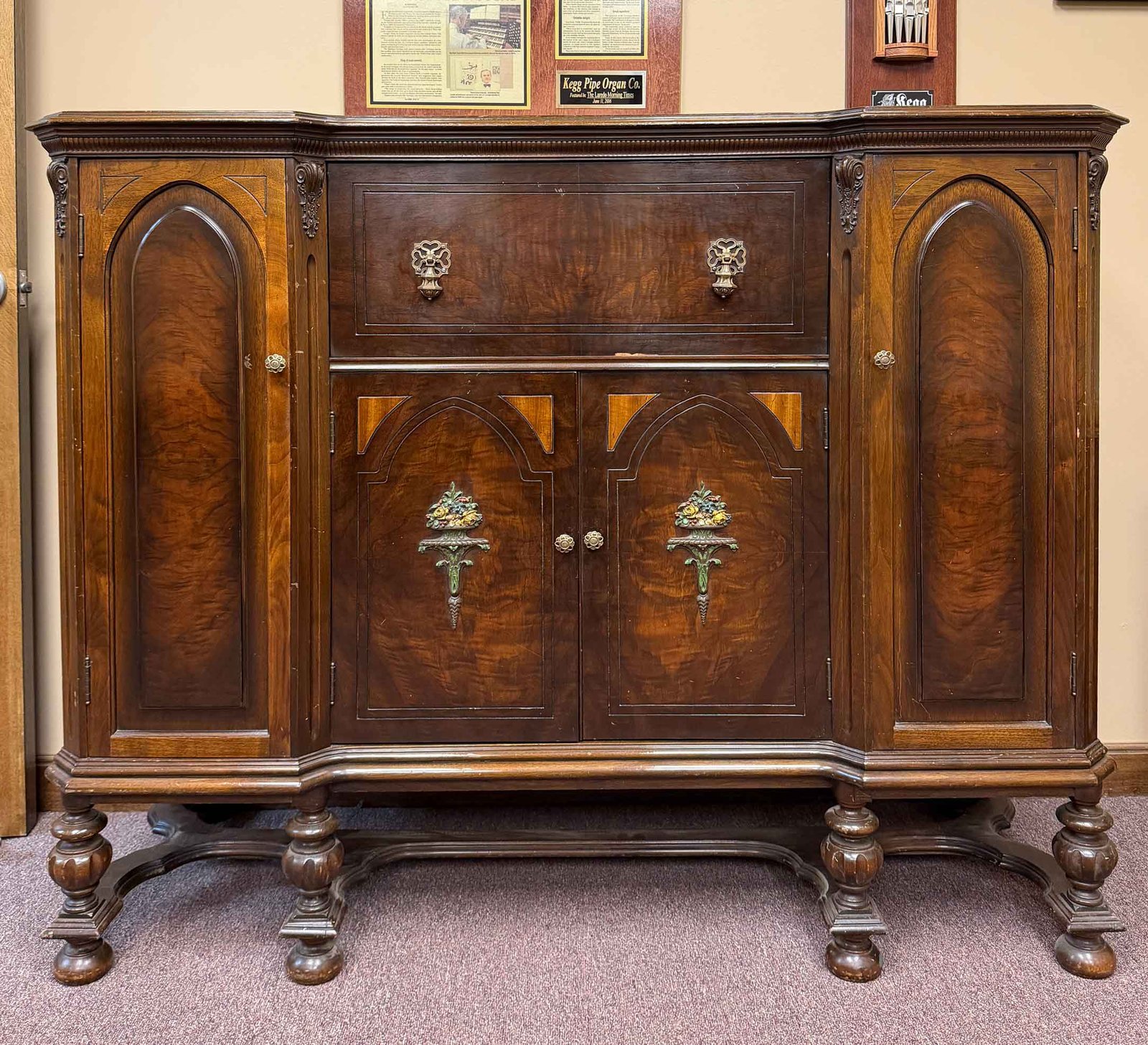
There is evidence that R-H had many well-known organists that recorded for them. Sadly, the rolls give no credit to the recording artist. One might speculate that Gaylord Carter recorded The Perfect Song (roll no. 186) as it certainly seems to be his arrangement, and he is mentioned in factory records having recorded for the company. If anyone has documentation about the artists that made rolls for this system, please contact us. While these players may be found installed into the organ console above the keyboards or in a drawer under the keyboards as mentioned above, they are more usually found installed in a separate cabinet. At this time, radio was young and many were built in cabinets made by companies different from the radio manufacturers. An empty radio cabinet could be handily purchased in most cities in a variety of sometimes elaborate styles. Organ builders took advantage of this by building players into these handsome and affordable cabinets. Here is an example:
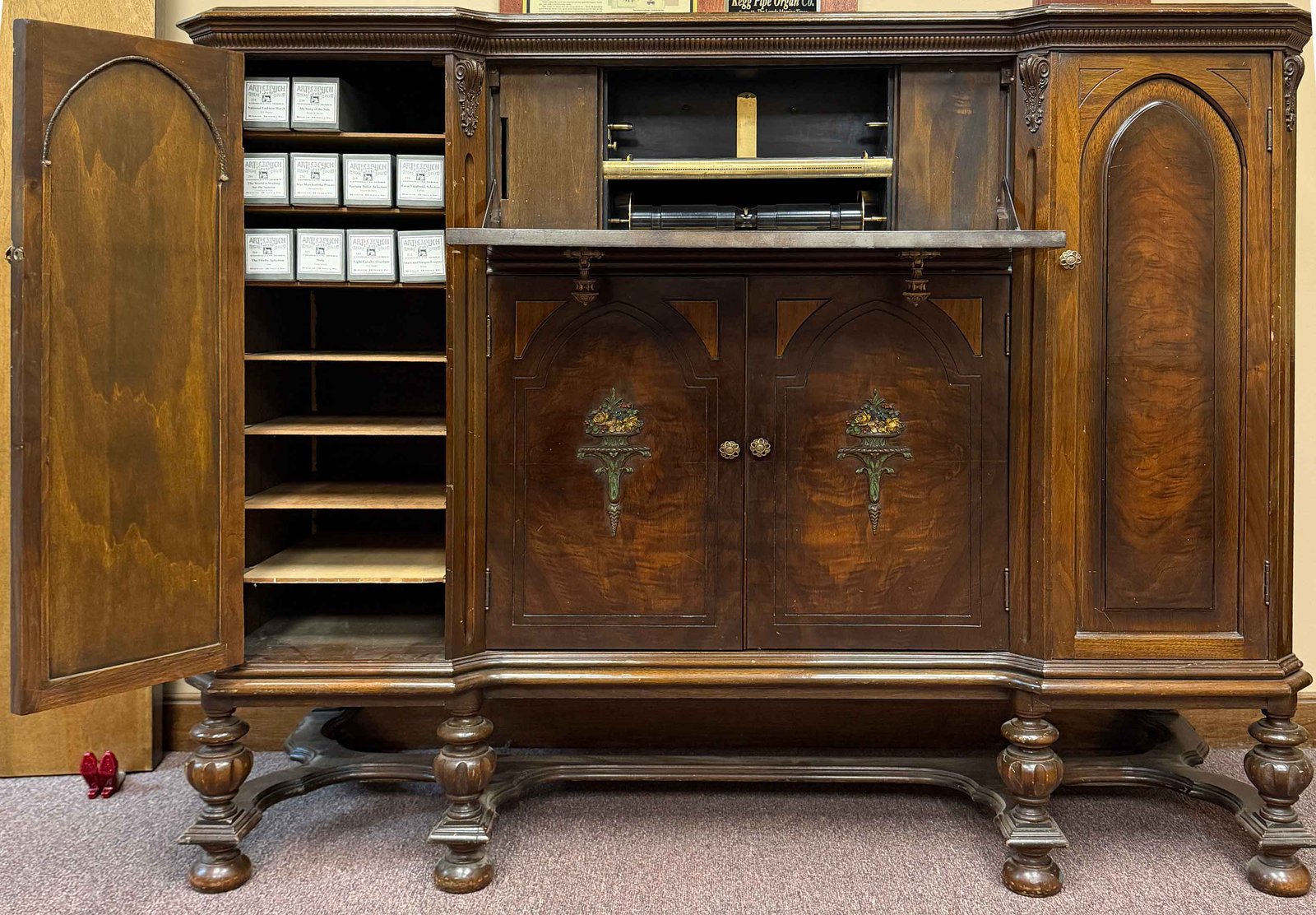
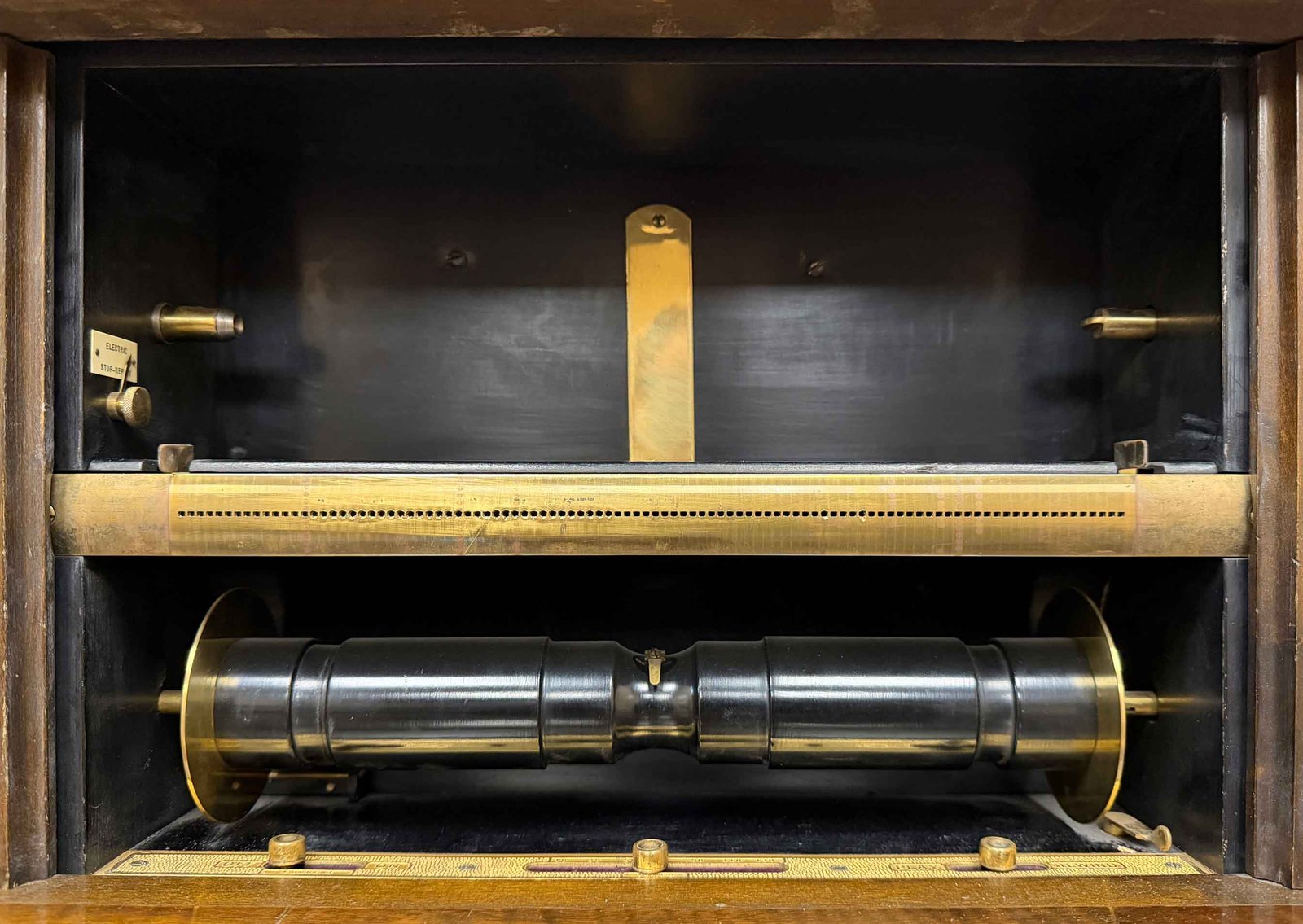
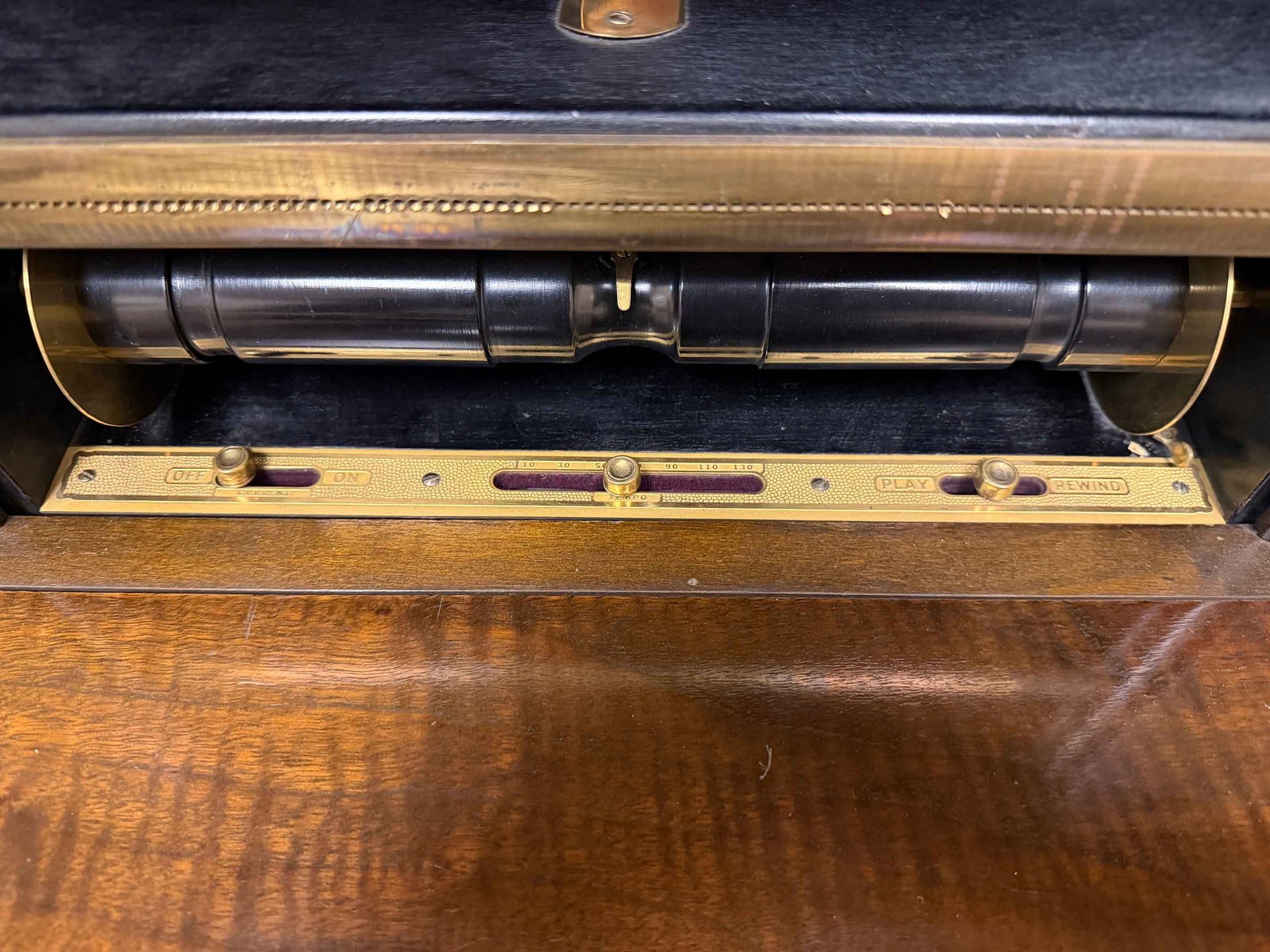
Clark or Roesler-Hunholz spool boxes are distinctive. Here are photos:
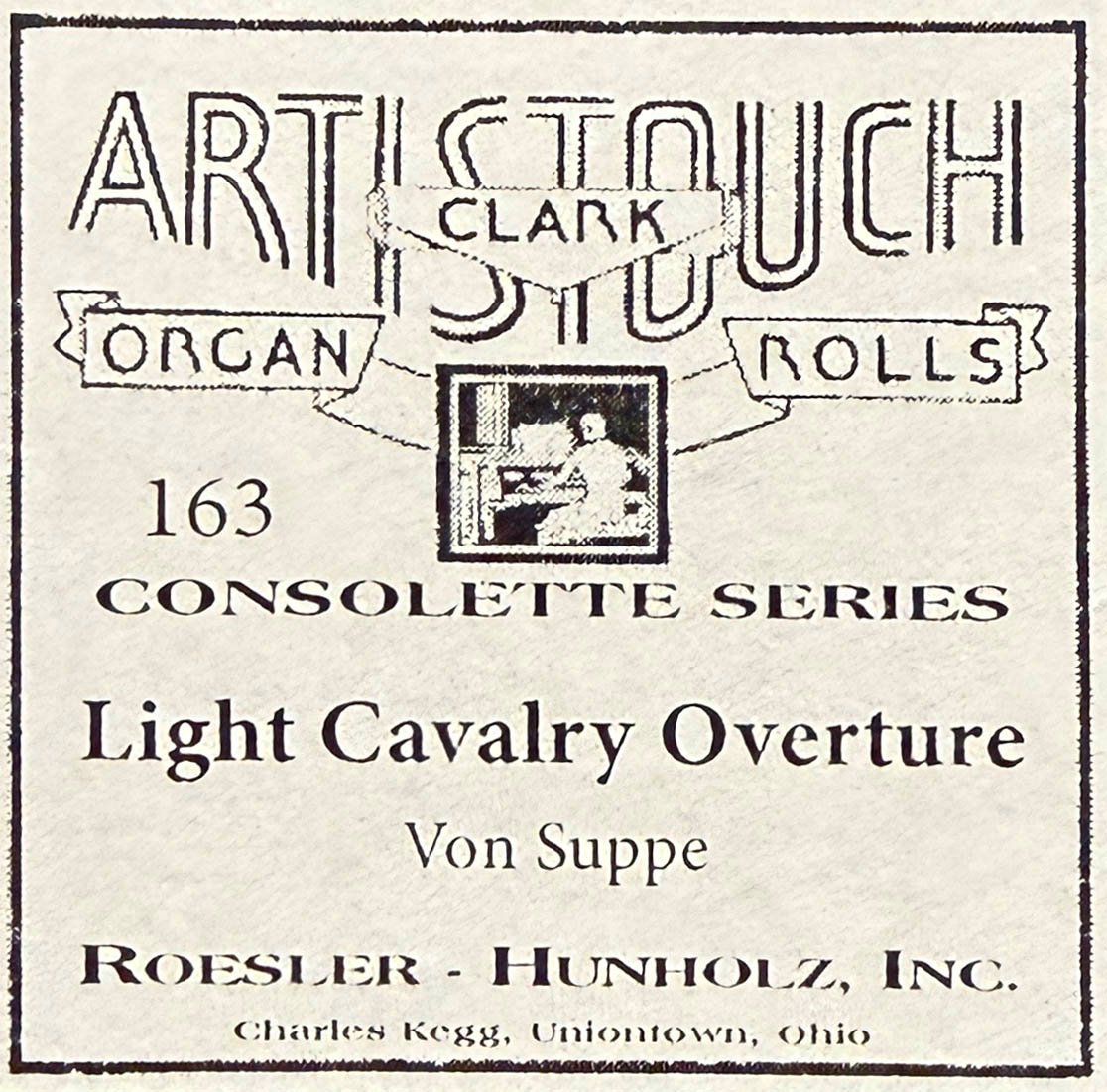
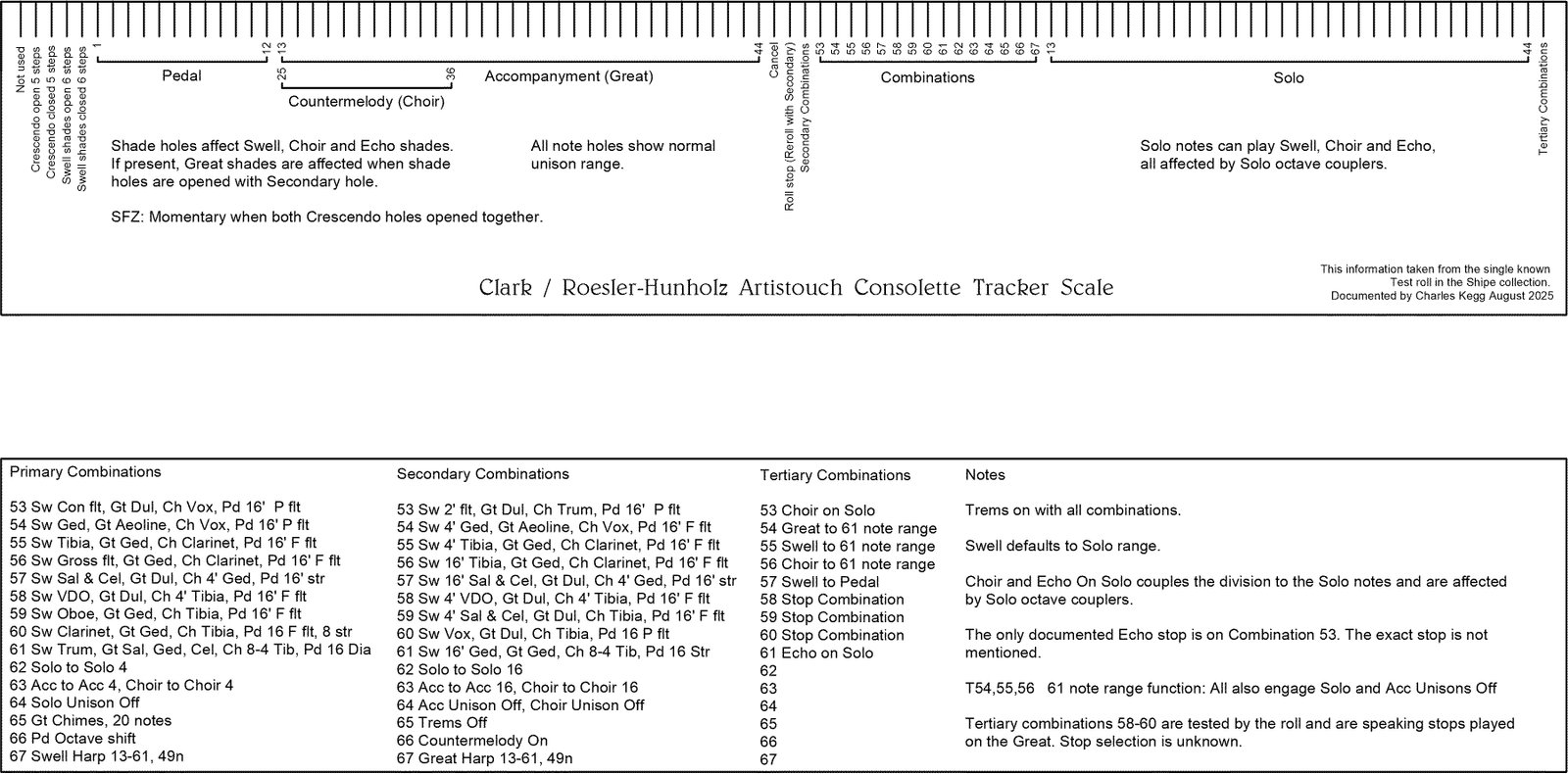
Note the metal escutcheon surrounding the controls and also the brass button slides. These are signature Clark or Roesler-Hunholz features. The Consolette model player system was the largest and most comprehensive system the company offered. Roll labels differ and one sometimes must look closely, but Consolette rolls should have the word "Consolette" somewhere on the label. The smaller players use an identical spool box and tracker bar, so identifying these machines can be vexing. The tracker scales are quite different. Consolette players select stops from a range of tracker ports in the center of the bar. Smaller models have their stop ports closer to the margins, and this is the easiest way to tell the rolls apart. There are 15 stop ports on the tracker, plus a cancel. The first version of the Consolette, probably by Clark, has 2 levels of stops, accessed by a shift hole. These are known as Primary and Secondary. If a stop port is opened, the Primary combination of stops is selected and locked in. If the Secondary Combinations port is opened sightly ahead of the stop combination port, the stop ports are shifted to a second set of 15 combinations and that secondary combination is set. On the latest version of the Consolette, probably done by Roesler-Hunholz, there is a third level called Tertiary. This is invoked by the Tertiary Combinations port, which was added to the original 98 ports scale in addition to a mirror port not usually used. Within a level, multiple combinations may be chosen together at the same time, or added. Each level has its combinations canceled from the Cancel port, which is shifted to each level along with the stop combinations. At the beginning of each roll, you will usually find a series of Expression Closed perforations along with a Cancel signal sent to each Combinations level. If you see Primary, Secondary and Tertiary cancels go by, this will indicate that this is a later roll that may use the Tertiary combination level. (The Tertiary Cancel uses the Cancel and Tertiary Combinations ports. The Tertiary Combinations port is the last one on the tracker bar on the right and is easy to spot.) There was at least one version of this player that had an additional Quatiary stop combinations level which appeared on a late machine built by the Kilgen company. The author has drawings of this machine and its forth level stop combinations, but this may have been a single machine as no other examples are known. The R-H test roll does not mention this at all. The key notes are as you can see on the tracker scale above. The ranges are extended by octave couplers and unisons-off, making the usual manual ranges 56 notes, 1-56. This was taken from a test roll and is a bit at odds with some other published information. The Great (Accompaniment,) Swell (Solo) and Choir (Counter Melody) have home positions on the tracker bar. The Echo can be attached to the Solo range by certain stop combinations. The Choir can also be attached to the Solo range, allowing it to be played more comprehensively than when played viz the Counter Melody. When the Counter Melody is turned on, those key note ports play only the Counter Melody and not the Accompaniment. In order for the machine to be able to play the full 61 note compass of the manuals, there is another function called XX to 61 note range, where XX is one of the manual divisions. This connects the two main tracker bar note port sections such that the full 61 note compass is available for use. The Pedal plays from 12 ports which can be shifted to play either notes 1-12 or 13-24, which is also selected by a stop combination. Expression is controlled by 4 ports in two pairs. One pair controls a Crescendo function, adding stops in 5 steps through a ratchet mechanism. Both of these ports open at once invokes a SFZ or Full Organ function for as long as both ports are open. Expression shades are controlled in a similar way from a second set of two ports, in 6 steps. In normal operation, these ports control Swell, Choir and Echo expression shades. If the Great has separate shades, they are controlled by these same ports with the Secondary Combinations port opened at the same time. Note that in this system, the Great is assumed to be in a different expression box from the Choir. In some earlier systems, the expression ports had an additional feature where if both ports were opened simultaneously, it would throw the shades quickly closed. The late test roll analyzed for this page does not include this function. At the beginning of each roll, there typically are as many as 7 Closed perforations made. These are done to make sure the mechanism is in a completely closed condition at the beginning. The author has also seen examples of this being done within a roll, which we assume was also to re-establish a known fully-closed condition. These mechanisms don't move contacts to a definite position, but simply nudge a sliding set of contacts toward one end or the other. Thus, single or multiple steps are not always exactly the same every time, and these correction operations were helpful. Much of this information was taken from an existing late original Roesler-Hunholz test roll that tests all these functions and note ranges. The author is heading a project to recut a limited number of Consolette rolls. Some may be available. Please inquire.
|